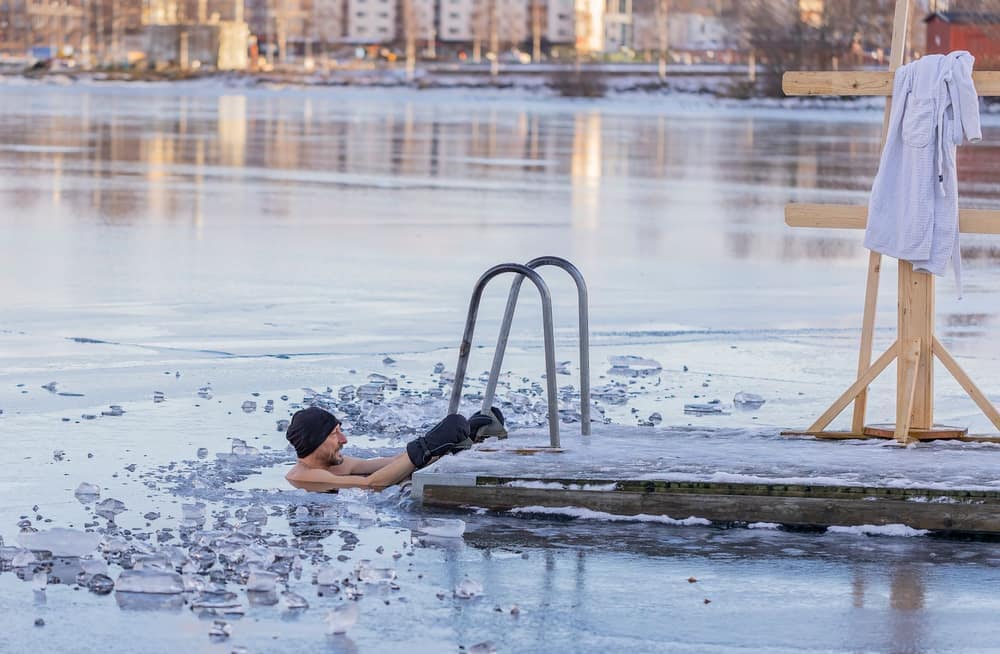
Contrast therapy simply means moving between hot and cold in the same visit — a spell in a sauna, then a cold plunge, repeated a few times. More Australian recovery studios now build a room around exactly this pairing, so it helps to know how a session tends to flow before you book.
What contrast therapy is
You warm up in a sauna, step into a cold plunge for a short dip, then return to the heat — that hot-then-cold swing is one round. Most people do two to four rounds in a session. There is no single correct protocol; venues and individuals vary, and the right length is the one that feels manageable to you.
How a round-based session usually runs
- Start with a warm-up in the sauna until you feel comfortably hot, often around ten to fifteen minutes.
- Move to the cold plunge for a short dip — newcomers often stay in well under a minute.
- Return to the sauna to warm through again, then repeat for two to four rounds.
- Rehydrate between rounds and step out whenever you have had enough.
Sauna, plunge, or both?
If you are new to either half, it is worth trying them on their own first before combining them.
You can read what a session is like on the infrared sauna page for the heat side.
For the cold side, and to find venues that pair both, browse ice bath and contrast therapy on RecoveryMap.
Some studios add a round of compression therapy to finish a session.
This is general information about how contrast therapy sessions are run, not health advice. Cold and heat are not right for everyone — if you have a heart condition, high blood pressure, or you are pregnant, speak with your GP first, and ask the venue what they suggest for first-timers.